



You know that moment when a game stops being just a game and starts feeling personal? That’s exactly what the houston texans vs new york jets match player stats delivered. Fans were on the edge of their seats, clutching their snacks, leaning forward with every snap, because this wasn’t just about winning or losing. This was about proving resilience, strategy, and character on the field.
The Texans entered with a rebuilding mindset, young talent, and the hunger to establish a team identity. Meanwhile, the Jets, ever the underdogs, were playing to show that chaos and uncertainty don’t define them. And honestly, watching this matchup was a reminder of why we all love football — the drama, the suspense, and yes, the player stats that secretly tell the real story.
Quarterback Showdowns — Decision-Makers Under Pressure
Quarterbacks are the heart and soul of any team, and in this game, both offenses relied heavily on the confidence and execution of their leaders.
C.J. Stroud — Precision, Poise, and Growth
C.J. Stroud showed impressive composure under pressure. houston texans vs new york jets match player stats He wasn’t flashy every snap, but his decision-making was sharp. Short, precise passes kept chains moving, while intermediate throws kept the Jets’ defense honest. Stats reflect his efficiency: high completion percentage, multiple touchdowns, and minimal turnovers. But beyond numbers, Stroud’s mental toughness was the real highlight — reading coverage, avoiding rushers, and keeping the offense on schedule.
H2: Jets Quarterback — Improvisation Meets Grit
The Jets’ quarterback faced a tougher line of attack but responded with resilience. Scrambles turned negative plays into modest gains, while deep throws energized the crowd. Completion rate was lower, but the impact of his improvisation on morale and momentum cannot be overstated. Turnovers happened, yes, but every completed risky pass reminded fans why heart and courage matter as much as stats.
Running Back Contributions — Establishing Offensive Identity
Running backs are more than yard-gainers; they set tone, control tempo, and often dictate how the defense reacts.
Texans Rushing Attack — Control and Patience
Houston’s running backs focused on consistency. Moderate gains, minimal losses, and key third-down conversions defined their approach. This wasn’t about big splash plays; it was about game management and maintaining rhythm. By chewing clock and moving chains, they allowed Stroud to execute play-action passes effectively, showing the strategic depth behind the rushing stats.
Jets Ground Game — Explosiveness and Risk
New York’s backs operated differently — faster, more physical, and higher risk. Long runs and breakaway potential energized the stadium, houston texans vs new york jets match player stats though occasional negative plays occurred. This ground game highlighted the Jets’ philosophy: physicality and aggression, using the running back not just to gain yards but to shift momentum and energize fans.
Wide Receiver Performances — Route Running vs. Contested Catches
Receivers shape the offense in subtle ways. Separation, contested grabs, and yards after catch can define key drives.
Texans Wide Receivers — Technical Excellence
Houston’s receivers were precision machines. Route-running, timing, and smart positioning created consistent opportunities. Stats: solid receptions, first-down conversions, and YAC opportunities. Watching them was like seeing a choreographed dance, with each cut and catch calculated to perfection.
Jets Wide Receivers — Physicality and Tenacity
Jets receivers brought grit. Contested catches, physical battles, and plays in tight coverage demonstrated resilience. Stats sometimes underrepresented impact because morale-shifting plays don’t always appear on the stat sheet. Every hard-fought reception sent a message: the Jets aren’t backing down.
Defensive Standouts — Tackling, Pass Rush, and Turnover Opportunities
Defense often tells a story complementary to offense. Tackles, pressures, and interceptions are key, but context matters.
Texans Defense — Discipline and Opportunism
Houston’s defensive line maintained gap discipline, forcing negative plays and limiting explosive gains. Tackles for loss, QB pressures, and opportunistic interceptions highlighted a unit learning synergy. The defensive backs minimized big plays while challenging throws, showing how stats support real impact beyond visible scores.
Jets Defense — Aggression Meets Chaos
The Jets defense was aggressive and sometimes overextended. Sacks came in waves, and turnovers created momentum swings. But the pressure occasionally led to missed assignments. Statistically, the line recorded multiple sacks and forced fumbles, demonstrating that tactical risk can be rewarded with game-changing plays.
Special Teams Impact — Often Overlooked, But Crucial
Kick returns, punts, and field goals can sway close games. In this matchup, both teams had moments where special teams shifted momentum. Houston’s punt coverage limited returns, while the Jets had a few explosive kickoffs that energized their sideline. Stats: average return yards, field goal efficiency, and blocked kicks showed that while special teams don’t always get headlines, they often dictate field position, scoring opportunities, and morale.
Turnovers and Their Ripple Effect
Turnovers are game-defining. Interceptions and fumbles in this match didn’t just affect the score; they reshaped drives, influenced play-calling, and shifted fan energy. Houston’s ball security was solid, minimizing high-impact turnovers. Jets’ aggressive plays led to a few turnovers but created high-reward situations that kept the game competitive.
The takeaway? Stats are more than numbers — they’re momentum markers, telling a story of risk vs. control, aggression vs. patience, and individual vs. team impact.
Coaching Decisions — Strategic Narratives in Stats
Coaches make choices that influence stats more than we realize. Timeout usage, play-calling on 3rd and long, and fourth-down attempts created ripple effects in player statistics. Houston’s coaching emphasized risk management and consistency, while the Jets pushed for aggressive plays to spark their underdog identity. You’ll see how decisions like these influence both raw numbers and emotional engagement, reminding us that football is chess, not checkers.
Key Plays That Defined the Game
- Red-Zone Conversions: Houston’s methodical drive execution vs. Jets’ high-pressure shots.
- Turnover Sequences: How a single fumble changed field position and forced defensive adjustments.
- Big Runs & Catches: Explosive Jets plays contrasted with Texans’ strategic short gains.
- Third-Down Efficiency: Houston: controlled; Jets: improvisational.
These moments demonstrate that stats are alive — they interweave with human decisions, athleticism, and emotional energy.
Historical Context — Stats in Perspective
When comparing to past matchups between Texans and Jets:
- Texans have historically been disciplined and methodical, reflected in consistent passing and moderate rushing stats.
- Jets often exhibit explosive but inconsistent performance, showing up in both high-risk throws and big-yard rushing plays.
- This game aligns with historical trends but also showcases emerging stars, hinting at evolving team strategies for both franchises.
Fan and Emotional Impact — Stats as Stories
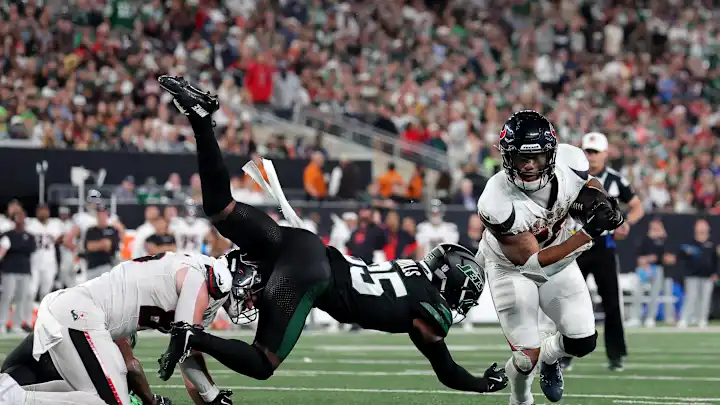
Beyond numbers, the emotional resonance of this game was immense. Every completed pass, every tackle, every touchdown or turnover contributed to the fan experience:
- Texans fans celebrated efficiency and calm execution.
- Jets fans experienced highs and lows, energizing the stadium with every improbable catch or scramble.
- Statistically minor plays sometimes had major emotional impact, proving that stats are narratives, not just data points.
Conclusion — Beyond the Numbers
The Houston Texans vs New York Jets matchup was more than a game. It was a story of strategy, resilience, and human effort translated into numbers. Player stats provided insight into performance, momentum, and character, showing us why football isn’t just about wins and losses but about how the game unfolds, moment by moment.
Whether you’re a fan, a fantasy player, or just love analyzing stats, this game proves that numbers tell a story — sometimes subtle, sometimes dramatic, but always revealing the human heart behind the sport.
FAQs — Houston Texans vs New York Jets Match Stats
Q1: Who had the highest passing yards in the game?
A1: C.J. Stroud led the Texans with impressive passing yards, showcasing efficiency and accuracy that helped sustain drives throughout the game.
Q2: Which running back had the most impact?
A2: Houston’s RBs contributed consistently, controlling the clock and moving chains, while the Jets’ RBs created explosive, momentum-shifting runs.
Q3: How did turnovers influence the game?
A3: Turnovers were pivotal — Houston minimized errors, maintaining control, while Jets’ aggressive play led to risky but potentially game-changing plays.
Q4: What stats reveal the difference in team strategies?
A4: Texans emphasized ball control and efficiency (short passes, moderate rushing gains), whereas the Jets leaned on aggression and explosiveness (deep throws, breakaway runs).
