


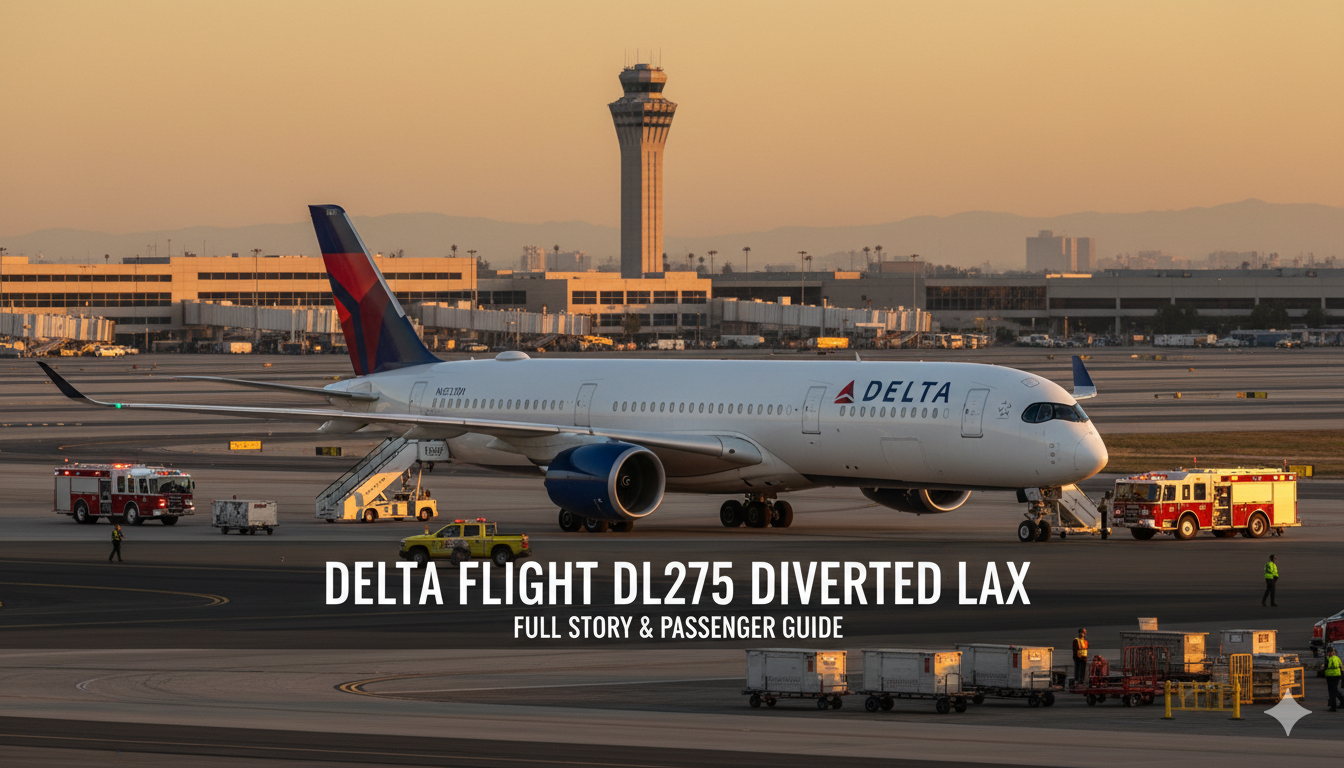
Have you ever been on a long flight and suddenly realized you were heading the wrong way? That is exactly what happened to travelers on a recent trip from Detroit to Tokyo. The Delta flight DL275 diverted LAX after a long journey over the cold North Pacific Ocean. It was a stressful time for everyone on board the big Airbus A350. Instead of seeing the bright lights of Japan, passengers looked out their windows and saw the sunny coast of California in the middle of the night.
A flight diversion is when a plane has to land at a different airport than the one planned. In this case, the Delta flight DL275 diverted LAX due to a technical problem that made it unsafe to cross the rest of the ocean. While it was a huge delay, the pilots made the right choice to keep everyone safe. In this article, we will look at the details of the flight, why the engine had trouble, and how Delta helped the passengers.
Detailed Flight Information Table
| Feature | Details |
| Flight Number | DL275 / DAL275 |
| Original Route | Detroit (DTW) to Tokyo Haneda (HND) |
| Aircraft Type | Airbus A350-900 |
| Diversion Airport | Los Angeles International (LAX) |
| Total Time in Air | Approximately 12 Hours and 15 Minutes |
| Reason for Diversion | Engine Anti-Ice System Technical Fault |
| Passenger Count | Over 300 passengers and crew |
Why the Delta Flight DL275 Diverted LAX Mid-Flight
Safety is the number one goal for any airline. When the Delta flight DL275 diverted LAX, it was because the pilots saw a warning light for the engine’s anti-ice system. This system is very important when flying over cold areas like the Bering Sea. If ice builds up on the engine, it can cause the engine to stop working. Nobody wants that to happen while flying over the deep, cold ocean!
The crew decided that turning back to a major hub was the best idea. Even though Seattle was closer, the Delta flight DL275 diverted LAX because Los Angeles has more tools and experts to fix the Airbus A350. By choosing LAX, Delta ensured that the plane could be repaired quickly by Rolls-Royce engine teams who work there 24/7.
Understanding the Engine Anti-Ice System Fault
You might wonder why a little ice is such a big deal for a giant jet. The Rolls-Royce engines on this plane use hot air from the engine to melt ice. This keeps the fan blades spinning smoothly. When the Delta flight DL275 diverted LAX, this “anti-ice” system was not flowing correctly. Data showed that the air flow was only half of what it should be.
If the pilots had kept going to Tokyo, the engine might have frozen up. This could lead to a dangerous “thrust loss,” which means the engine loses its power. Because the Delta flight DL275 diverted LAX, the plane landed safely without any engine failure. It was a “better safe than sorry” move that saved the day.
The Long Journey: 12 Hours to Nowhere
Imagine sitting on a plane for 12 hours only to end up in the same country where you started! That is the frustrating reality of why the Delta flight DL275 diverted LAX. The flight had already been in the air for many hours and was near Alaska when they turned around. By the time they landed in California, the flight had lasted almost as long as the full trip to Tokyo would have taken.
For the people on board, it felt like a journey to nowhere. However, the Delta flight DL275 diverted LAX incident shows how much fuel these big planes carry. They were able to fly for five more hours after the problem started just to reach a safe airport with a Delta maintenance base.
How Delta Air Lines Managed the Passengers at LAX
Once the Delta flight DL275 diverted LAX, the ground crew had a big job to do. They had to help hundreds of tired and upset travelers. Usually, when a big flight like this lands unexpectedly, the airline provides food vouchers and hotel rooms. Since LAX is a major hub for Delta, they had plenty of staff ready to help.
Communication is key during these times. Delta worked to rebook everyone on new flights to Tokyo as soon as possible. While the Delta flight DL275 diverted LAX caused a big delay, the airline’s goal was to make sure everyone stayed comfortable while the technical teams looked at the aircraft’s engine.
The Role of Maintenance Hubs in Flight Diversions
Why didn’t they just land in Alaska? That is a great question. While Anchorage has an airport, it does not have the specific parts or mechanics for every type of plane. The Delta flight DL275 diverted LAX because Los Angeles is a “mega-hub.” It has everything needed to fix an Airbus A350.
Airlines often choose hubs for diversions because it is easier to find a spare plane there. If the Delta flight DL275 diverted LAX and the plane couldn’t be fixed, Delta could simply pull another plane from their fleet at LAX to finish the trip. This is much harder to do at a small, snowy airport in the middle of nowhere.
Is the Airbus A350 Still a Safe Aircraft?
Yes, the Airbus A350 is actually one of the safest and most advanced planes in the sky today. The fact that the Delta flight DL275 diverted LAX safely proves how well-built these machines are. Even with a system fault, the plane flew steadily for hours to reach its destination.
Safety systems are designed to give pilots warnings long before a real emergency happens. When the Delta flight DL275 diverted LAX, the pilots were following their training to act on those warnings. This “people-first” approach to safety is why flying remains the safest way to travel across the globe.
What to Do If Your Flight Is Diverted
If you find yourself in a situation like the Delta flight DL275 diverted LAX, the best thing to do is stay calm. Listen to the flight attendants and check your airline’s mobile app for updates. Most airlines will automatically rebook you on the next available flight.
- Keep your phone charged to receive alerts.
- Stay near the gate for announcements.
- Ask for meal vouchers if the wait is long.
- Remember that the Delta flight DL275 diverted LAX was for the safety of everyone.
The Impact of Predictive Technology in Aviation
New technology could help stop these problems before the plane even leaves the ground. Experts say that AI can now look at engine data to see if a part is starting to wear out. If this tech had been used perfectly, the Delta flight DL275 diverted LAX might never have happened because the part would have been fixed in Detroit.
As airlines use more of this “predictive maintenance,” we will see fewer diversions. For now, we can be glad that the Delta flight DL275 diverted LAX ended with a safe landing and no injuries, thanks to the quick thinking of the Delta crew.
Conclusion: Safety Always Comes First
The story of how the Delta flight DL275 diverted LAX is a perfect example of aviation safety in action. While a 12-hour detour is a huge headache for travelers, it is a small price to pay for a safe arrival. Delta showed their expertise by managing the technical fault and getting passengers to a hub where they could be cared for properly.
The next time you hear about a flight diversion, remember that it means the pilots are doing their job. They are putting your life above the flight schedule. Whether it’s a mechanical issue or weather, a diversion is a sign that the system is working to keep the skies safe for everyone.
Frequently Asked Questions (FAQs)
1. Why was Delta flight DL275 diverted LAX specifically?
The flight was diverted because of a problem with the engine’s anti-ice system. This system is necessary to prevent ice from forming on the engine during cold transpacific flights.
2. How long were the passengers on the plane?
Passengers were in the air for over 12 hours. They flew from Detroit toward Tokyo and then back down to Los Angeles, which is a very long trip to end up back in the U.S.
3. Did Delta provide compensation for the delay?
Generally, in cases of mechanical delays, airlines like Delta provide meal vouchers, hotel stays, and help with rebooking. You can check Delta’s official policy for specific details on this incident.
4. Is LAX a Delta hub?
Yes, Los Angeles International (LAX) is one of Delta’s major West Coast hubs. This made it the perfect place for the Delta flight DL275 diverted LAX because they have many resources there.
5. Was anyone hurt during the diversion?
No, there were no reported injuries. The landing was a precautionary measure, and the plane landed normally on the runway at LAX.
